
Why Did Yani Neko Catch On Overseas? “Alcoholic Karakara” and Japan’s Way of Turning the Uncomfortable Into Memes
Known overseas as Chainsmoker Cat, Yani Neko drew jokes about being an anti-smoking campaign. In Japan, some viewers reached for another reference: “Alcoholic Karakara.” The comparison says less about national tolerance than about the different meme vocabularies people use to make uncomfortable material legible.
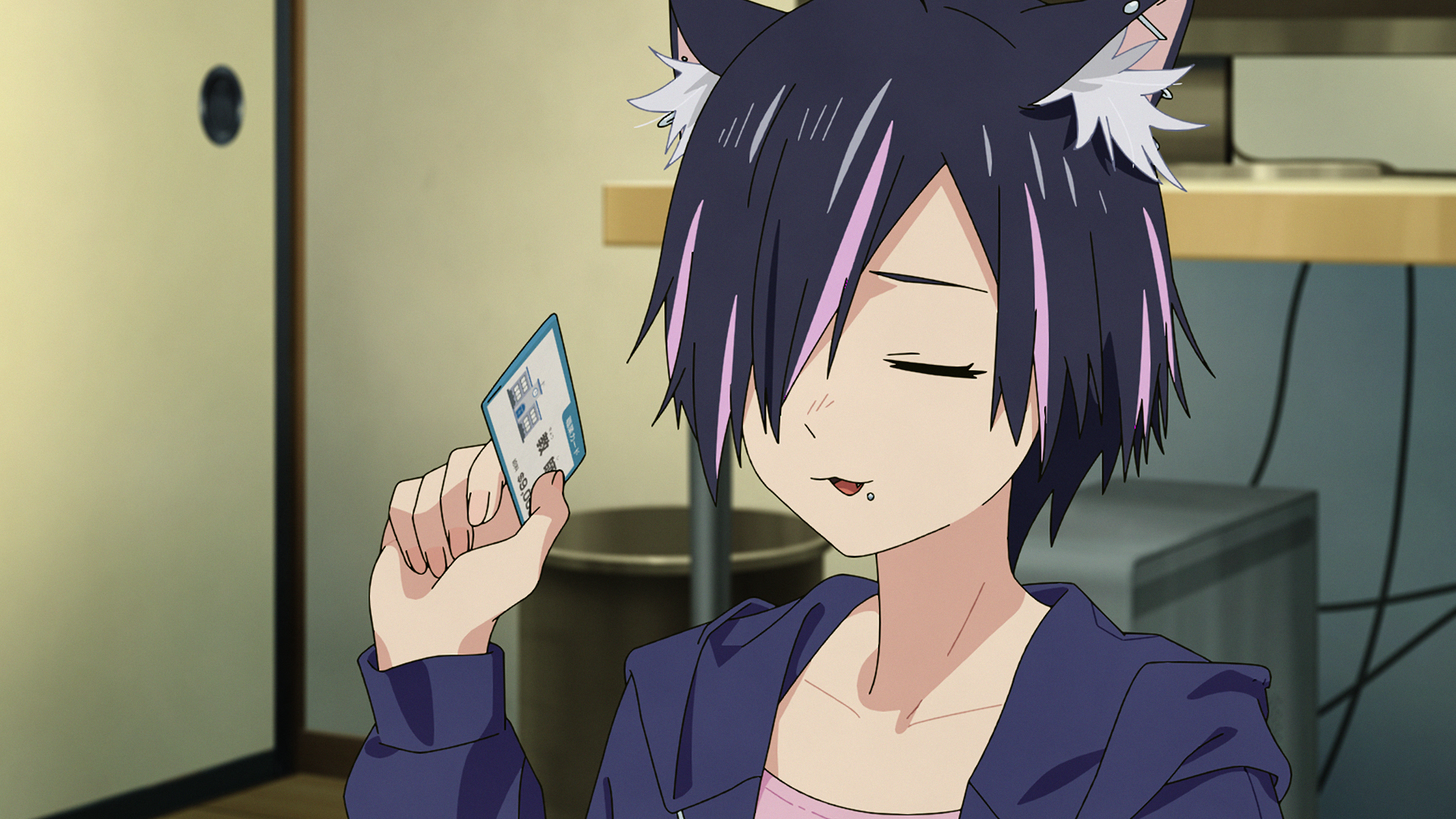
Yani Neko is built around a contradiction. Its characters are cute; their lives are not. The anime follows a cat-eared woman who cannot stop smoking even as work, rent, housekeeping and relationships slide around her. Rooms get filthy, money disappears, and the next cigarette still wins.
The official site leans into that gap between cute character design and ugly everyday life. Smoking and dependency are only part of it: the comedy also lingers on the bodily and domestic mess that other slice-of-life shows usually edit out.
That ugliness turned out to travel well. English-speaking viewers quickly picked up the title Chainsmoker Cat. In the r/anime discussion for episode 1, commenters joked that the show worked like an anti-smoking campaign, while former smokers recognized how thoroughly it strips cigarettes of glamour. The response was not universal praise; disgust was part of the appeal, and sometimes the reason to stop watching.
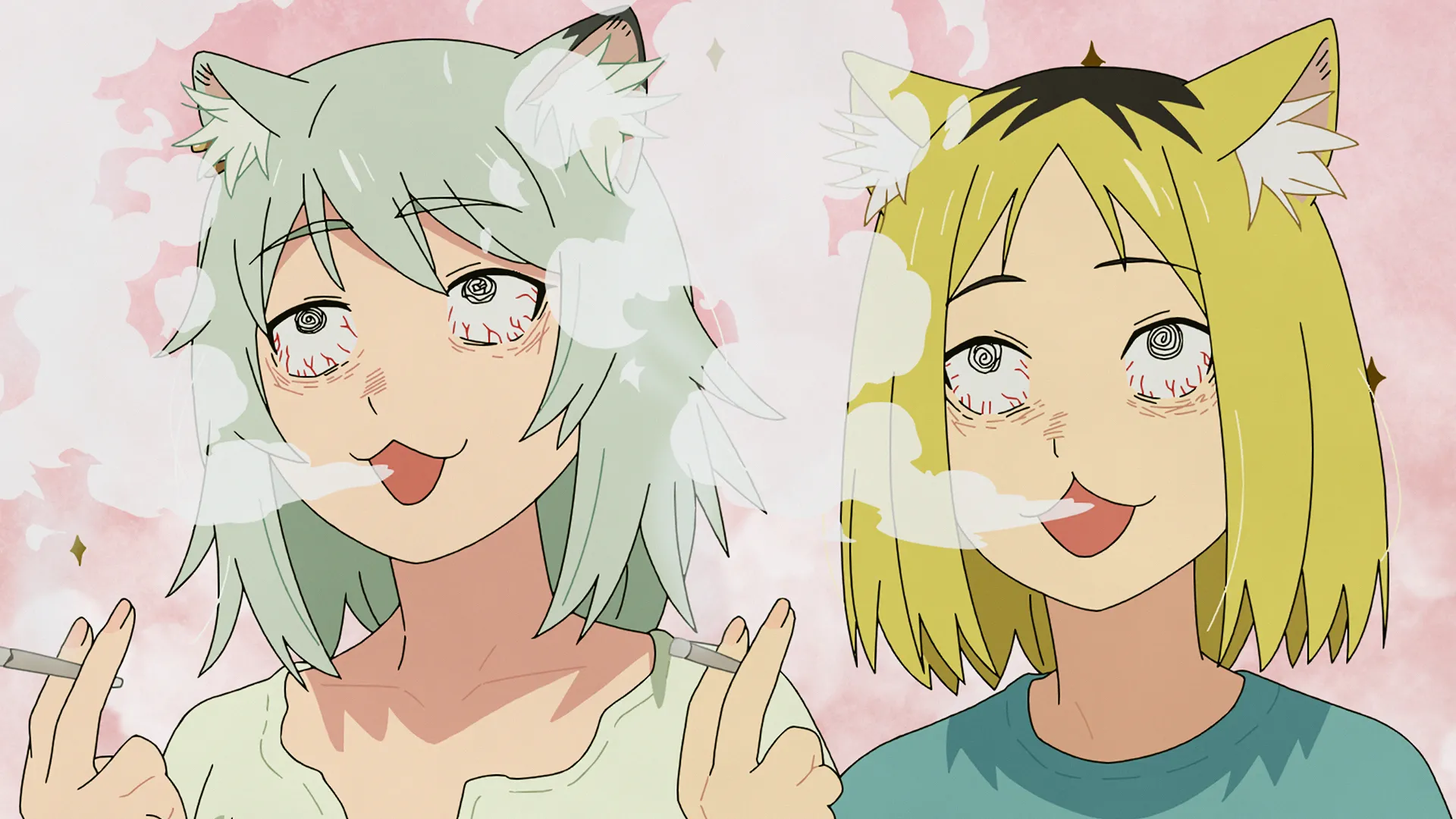
Official visual for the TV anime Yani Neko.
Overseas, the Joke Looked Like an Anti-Smoking Ad
Cigarettes in fiction are often used as shorthand for adulthood, coolness or danger. Yani Neko points the camera in the opposite direction. The habit is expensive, repetitive and undignified; it contributes to a life that is already coming apart at the edges.
That made “anti-smoking campaign” an easy joke for overseas viewers. The humor works because the show is exaggerated while the logic of dependency remains recognizable. It is funny, but it is not flattering.
Discussion: r/anime — Chainsmoker Cat / Yani Neko Episode 1
Video: Official Yani Neko trailer on YouTube
In Japan, “Alcoholic Karakara” Kept Coming Up
Japanese reactions to the anime sometimes invoked Alcoholic Karakara directly.
One post described a drinking scene this way:
English translation
“That’s the Alcoholic Karakara way of drinking.”
Original Japanese: 「アル中カラカラの飲み方なのよ #yanineko」
Another viewer reduced the reaction to the meme’s name alone:
English translation
“Alcoholic Karakara” (#TokyoMX; #YaniNeko).
Original Japanese: 「アル中カラカラ #tokyomx #yanineko #ヤニねこ」
The reference works because wawawa’s videos had already turned an unhealthy routine into a recognizable performance. Huge highballs, improvised cooking, heavily used utensils, repeated phrases, and the clatter of ice became a familiar set of signs. Viewers laughed at the spectacle while also worrying about the person making it.
ITmedia reported that several of the videos passed one million views and that, after uploads stopped in May 2020, concern about wawawa’s well-being became part of the story. In 2025, a recruitment video from Kyocera Communication Systems went viral because its final sequence strongly evoked the same imagery. The company declined to say whether the person shown was wawawa, so there is no basis for treating that as confirmed.
Background: ITmedia NEWS on the KCCS recruitment video and the “Alcoholic Karakara” comparison
Video: KCCS recruitment concept movie on YouTube
Original video reference: wawawa video on Niconico (sm35677159)
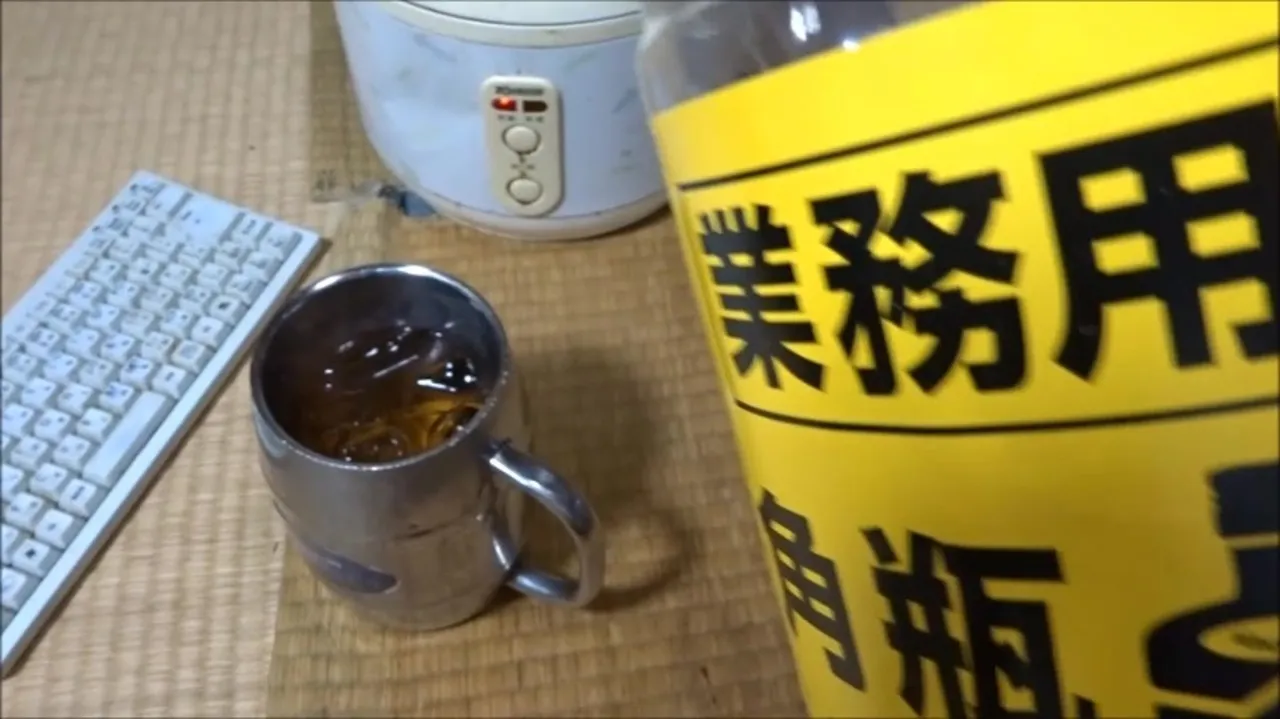
Still from a wawawa video associated with the “Alcoholic Karakara” meme.
Source: Niconico — sm35677159
Yani Neko Also Puts Heavier Material Next to the Joke
Smoking, addiction and filth are not the only uncomfortable material Yani Neko places beside comedy. The series also hints at a history of discrimination between humans and beastfolk.
Episode 5 includes an old “Beastfolk Life Game” board game. In the scene, a profession card reads “Teacher,” while the dialogue notes that beastfolk cannot become teachers. The point is not that this should be read as a current rule of the world in the story. The scene presents the restriction through an old game, like a fossil of an earlier prejudice whose assumptions now look dated.
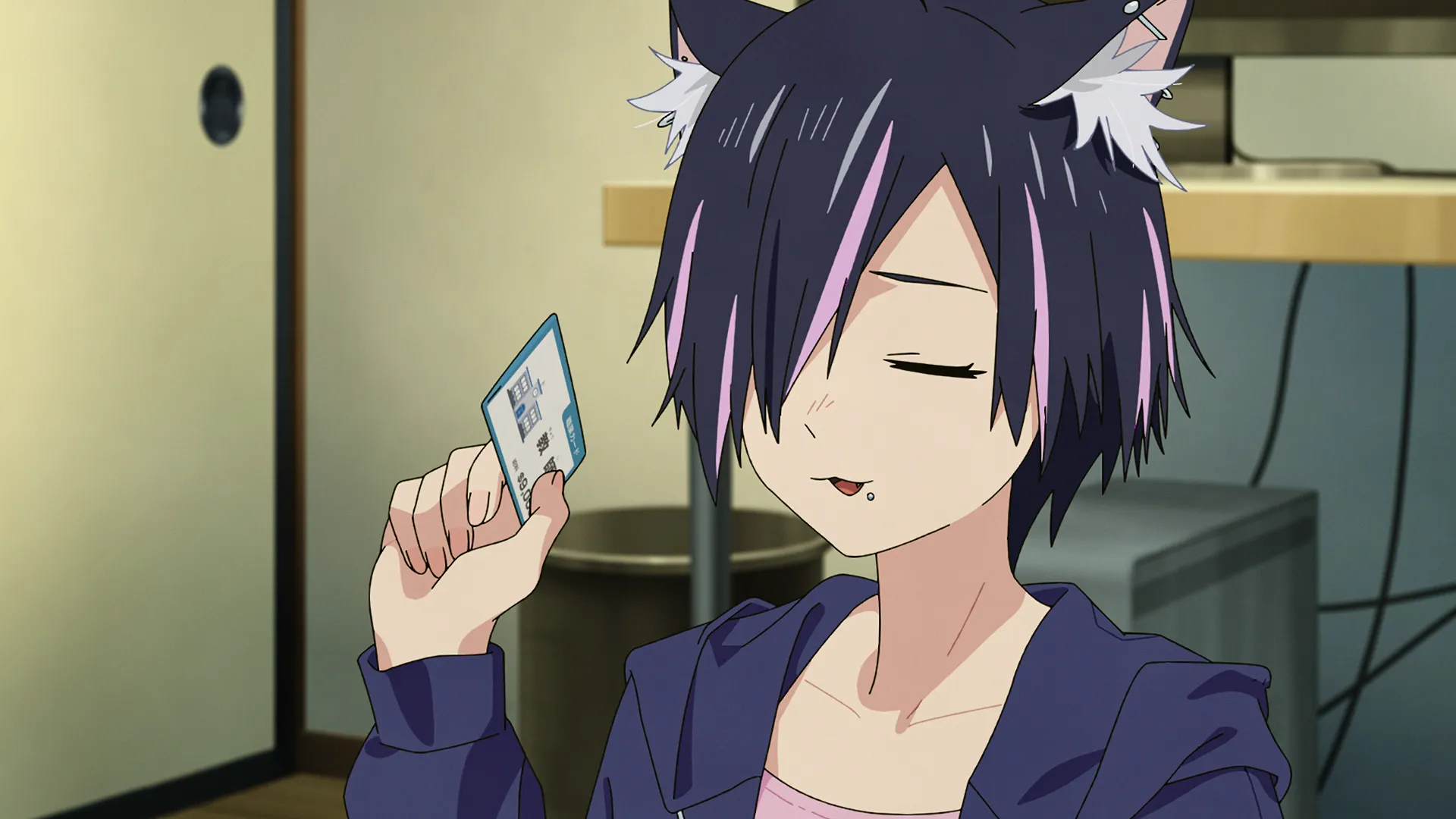
Episode 5: the old “Beastfolk Life Game” scene. Shown here as a quoted visual reference for criticism and commentary.
Source: TV anime Yani Neko — Episode 5 information | official still
What matters here is the way the subject is handled. Yani Neko does not suddenly become a social-issue drama. A discriminatory idea appears as a rule in an old board game, gets called out as outdated, and the story moves back into comedy. The problem is neither erased nor developed into a lecture; it is caricatured and placed inside the same comic world as smoking, poverty and domestic squalor.
That uneasy adjacency is part of the point. Material that would normally demand a solemn register is compressed into a joke-shaped form without becoming completely weightless. The audience is allowed to laugh while still recognizing that the thing being joked about is not entirely harmless.
The Comparison Itself Became a Meme
That comparison should not be treated as a claim about Japanese viewers as a whole. Yahoo! Real-Time Search also surfaces counterexamples: some viewers say they can watch Alcoholic Karakara but still find Yani Neko difficult to watch; others say the comparison does not hold for them.
Yahoo! Real-Time Search — Yani Neko and Alcoholic Karakara reactions
That counterexample matters. The mix of comparison and pushback is better understood as a meme about shared references than as a serious theory of national character. Some Japanese viewers were repelled by Yani Neko; some overseas viewers loved it. What differs is not a universal level of tolerance but the cultural shorthand available when people try to explain what they are seeing.
For one audience, “anti-smoking campaign” is the obvious frame. For some Japanese viewers, “Alcoholic Karakara” can compress an entire history of online jokes, concern, repetition and bodily excess into two words.
Turning the Uncomfortable Into a Reusable Format
Meme research often describes this kind of movement as recontextualization: familiar images, phrases or characters are lifted from one setting and used to interpret another. A study in Frontiers in Communication, focused on political internet memes, uses the term to describe how meaning changes as material is recombined with new contexts, pop-culture references and humor. The concept is useful here as a lens, not as proof of anything uniquely Japanese.
Japanese quote-meme culture offers a conspicuous version of the same mechanism. Inmu-derived catchphrases, for example, are routinely detached from their original context and applied to unrelated news, sports, politics, accidents and everyday events. Even serious subjects can first be compressed into a familiar line or character before they are discussed. That can look tasteless or reductive; it can also create enough distance for a subject to become shareable. The point here is not to judge the practice, but to notice the reusable form.
The Yani Neko–wawawa comparison works in much the same way on a smaller scale. The two are not part of the same franchise or creative lineage. What gets transferred is a way of reading the scene: unhealthy consumption, a life sliding out of order, and an audience laughing while remaining aware that the underlying situation is not entirely funny.
Once that cluster of meanings has been packed into a meme, it becomes portable. “Alcoholic Karakara” no longer has to mean only one set of Niconico videos; it can become a shorthand for a recognizable kind of chaotic, self-destructive comedy.
Yani Neko itself mirrors that logic. Dependence, poverty and the residue of beastfolk discrimination are not presented in isolation from the jokes; they sit immediately beside them. The series does not deny the weight of those subjects, but it repeatedly pulls them into a comic register rather than separating them into a moral lesson.
Different Meme Dictionaries, Same Cat
That is the more interesting difference between the overseas and Japanese reactions. English-speaking viewers often reached for the language of public health: Yani Neko as an anti-smoking ad disguised as a comedy. Some Japanese posts reached for an older internet reference and answered with “Alcoholic Karakara.”
Neither description explains every viewer. Both are ways of connecting a new work to something the audience already knows. Yani Neko arrived with cigarettes, grime and dependency on screen; the internet supplied the dictionary.
Glossary
- Alcoholic Karakaraアル中カラカラ
A Japanese internet meme nickname for the highball-and-cooking videos of Niconico creator wawawa.
- Inmu Quote-Meme Culture淫夢
A Japanese online fandom that circulates quotations and remixes from gay adult media as memes.
- Niconico Dougaニコニコ動画
A Japanese video-sharing service known for comments synchronized to playback and overlaid directly on the video.


Comments
Name and email are optional. Comments and names are public and may be moderated. Email addresses are not published. Privacy Policy.